






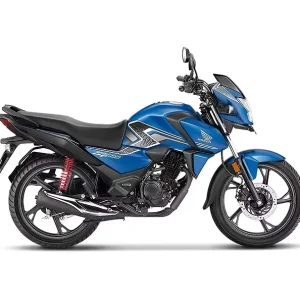


Description
Suzuki Hayate EP Price in Bangladesh 2026
As of March 2026, the official (Bangladeshi Authorized Distributor) price for the Suzuki Hayate EP stands at BDT 118,000. Rancon Motorbikes Limited, the sole distributor of Suzuki motorcycles in Bangladesh, maintains this pricing across its nationwide dealer network. However, local market prices can fluctuate marginally between BDT 118,000 and BDT 121,000 depending on regional showroom transportation costs, localized dealer promotional packages, and instant cash-back offers.
Understanding why motorcycle prices vary in the Bangladeshi market requires an inspection of macroeconomics and industrial policy. Over the last two years, the continuous fluctuations in the US Dollar to BDT exchange rate have altered the opening costs of Letters of Credit (LCs) for Completely Knocked Down (CKD) kits. Furthermore, national budget shifts regarding import duties on raw steel, rubber components, and specific electrical assemblies directly impact local assembly plants.
Thankfully, because Suzuki utilizes a highly optimized local manufacturing and assembly facility in Gazipur, Bangladesh, they have shielded the budget commuter segment from the severe price spikes observed in premium 150cc imports. Showroom availability remains high throughout major metropolitan regions like Dhaka, Sylhet, Bogura, and Khulna, ensuring buyers can access original parts and factory-spec servicing right off the showroom floor.
Full Technical Specifications of Suzuki Hayate EP
To understand the core mechanical profile of this 110cc commuter, look directly at the engineering schematics. Below is the complete technical datasheet for the Suzuki Hayate EP:
| Category | Specification Item | Engineering Parameter / Data Value |
| Engine & Power | Displacement | 113.0 cc |
| Engine Type | 4-Stroke, 1-Cylinder, Air-Cooled, SOHC, 2-Valve | |
| Max Power Output | 8.7 BHP @ 7,500 RPM | |
| Max Torque Output | 9.3 Nm @ 5,000 RPM | |
| Bore x Stroke | 51.0 mm x 55.3 mm | |
| Compression Ratio | 9.5:1 | |
| Fuel Delivery System | Carburetor (Optimized with Suzuki Eco Performance) | |
| Transmission | Clutch Variant | Wet Multi-Plate Type |
| Gearbox | 4-Speed Constant Mesh | |
| Shift Pattern | All Down / Foot-Operated | |
| Chassis & Suspension | Frame Structure | Tubular Diamond Frame |
| Front Suspension | Telescopic Forks, Oil Damped | |
| Rear Suspension | Dual Swingarm, 5-Step Preload Adjustable Coil Springs | |
| Brakes & Tyres | Front Brake Assembly | 130 mm Mechanical Drum Brake |
| Rear Brake Assembly | 110 mm Mechanical Drum Brake | |
| Front Tyre Dimensions | 70/100-17 M/C 40P (Tubeless) | |
| Rear Tyre Dimensions | 80/100-17 M/C 46P (Tubeless) | |
| Wheel Architecture | 5-Spoke Lightweight Die-Cast Alloy | |
| Dimensions | Total Length x Width x Height | 2025 mm x 740 mm x 1060 mm |
| Wheelbase | 1305 mm | |
| Ground Clearance | 165 mm | |
| Seat Height | 795 mm | |
| Kerb Weight | 107 kg | |
| Fuel Tank Capacity | 10.0 Liters (including 2L Reserve) | |
| Electricals | Battery Specification | 12V, 3Ah Maintenance-Free (MF) |
| Headlamp Type | 12V 35/35W Halogen Bulb | |
| Tail / Brake Lamp | 12V 21/5W Halogen Bulb | |
| Starting Mechanism | Electric Starter & Traditional Kick Start |
Detailed Review of Suzuki Hayate EP: The Blue Core King
While competing brands use trademarks like “Blue Core” to denote low-friction engineering paradigms, Suzuki utilizes its proprietary SEP (Suzuki Eco Performance) ecosystem. This technology allows the Hayate EP to compete as an efficiency leader in the entry-level segment. Let’s break down how this manifests during daily operation on Bangladeshi roads.
Engine Longevity and Thermal Mechanics
The heart of the Hayate EP is a 113cc single-cylinder mill configured with a longer stroke ($55.3\text{ mm}$) relative to its bore ($51.0\text{ mm}$). This configuration shifts the torque curve lower in the RPM range, peaking at just 5,000 RPM. For the rider, this means you do not have to wring the throttle to pull away from traffic lights or carry heavy cargo.
The inclusion of high-ignition spark plugs and optimized crank arrangements minimizes frictional power loss inside the crankcase. The engine cooling fins are cast with a wider surface area to maximize heat dissipation. This design is crucial for preventing thermal degradation when idling under the blazing sun on Dhaka’s flyovers.
Structural Integrity & Chassis Performance
The frame utilizes a high-tensile steel diamond architecture. The chassis performance shines when encountering uneven road surfaces or carrying a pillion passenger alongside daily groceries. Unlike cheaper commuter frames that flex under lateral loads, this diamond frame handles cornering forces smoothly.
The wheelbase has been extended to 1305 mm, providing a stable geometric footprint that keeps the bike planted at its top cruising speeds of 70–80 km/h. It mitigates the nervous, twitchy steering behavior common in ultra-lightweight commuter motorcycles.
Aesthetics, Plastic Quality, and Body Panels
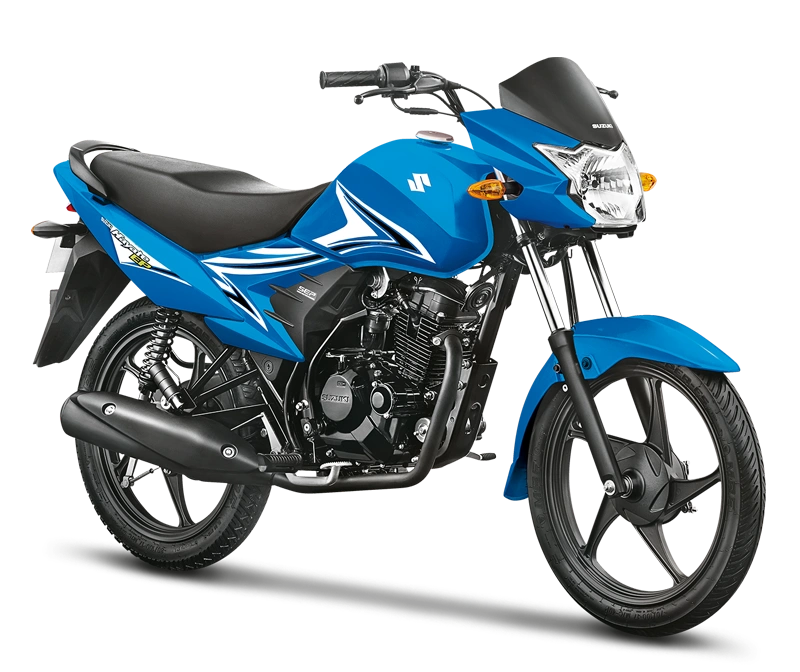
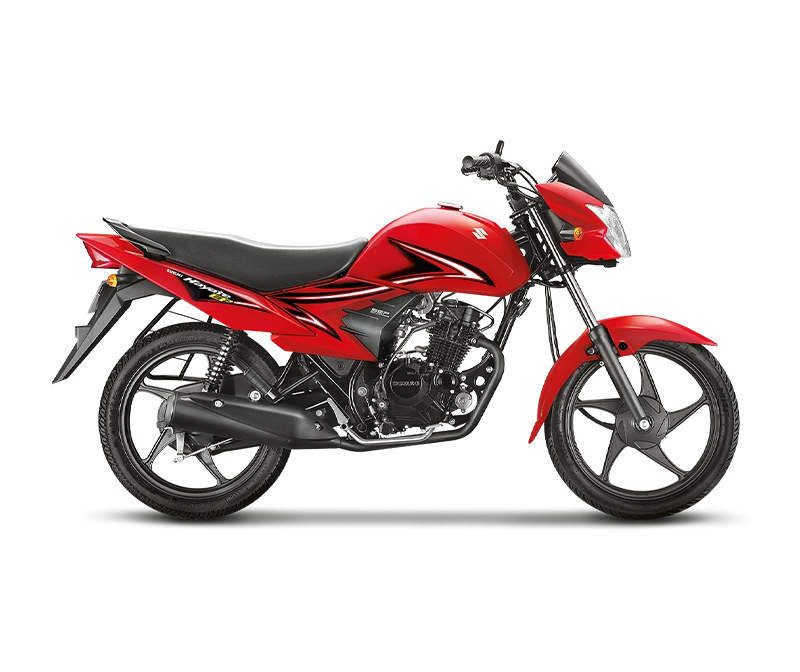
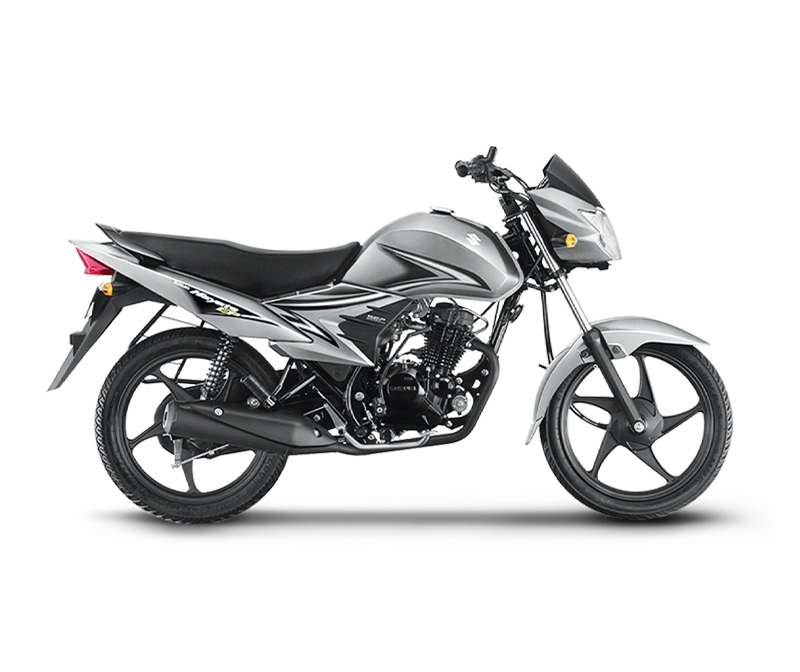
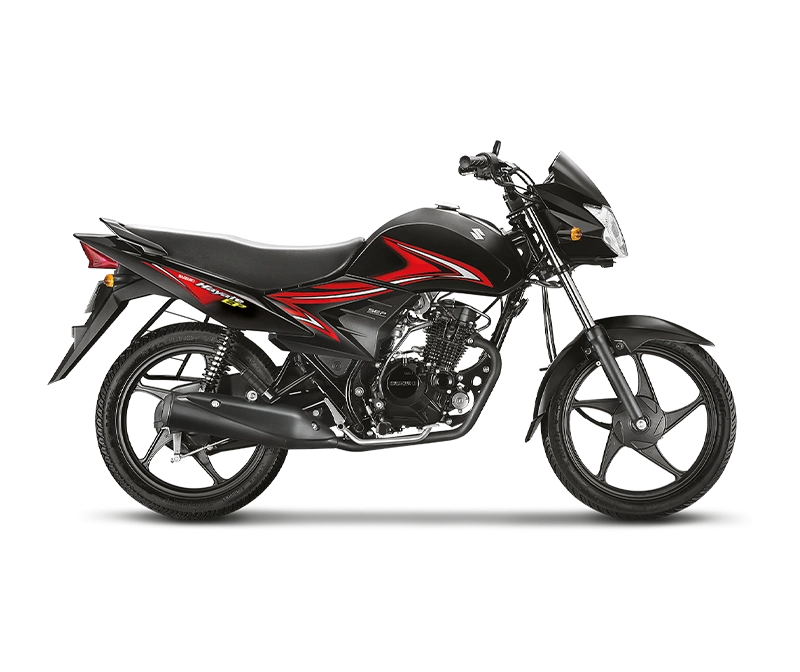
Commuter bikes often sacrifice aesthetics for utility, but Suzuki adopts a different design philosophy here. The front cowl features sharp, angular lines modeled closely after its larger sibling, the Suzuki Gixxer. The fuel tank is sculpted with knee recesses that help riders lock their lower body to the machine, improving physical control.
The paint quality features a high-gloss finish with UV-resistant clear coats, preventing premature fading under harsh tropical weather. The side panels and rear mudguards are molded from high-density, flexible plastics that bend rather than snap when subjected to minor parking lot bumps.
Real-World Mileage & Monthly Running Cost
For the practical commuter in Bangladesh, a motorcycle is primarily a financial tool designed to limit transportation expenses. Let’s analyze the exact fuel economics of the Suzuki Hayate EP based on real-world test data rather than pristine laboratory claims.
While factory specifications highlight an ideal fuel economy upward of 75 km/L under controlled highway environments, real-world operation inside high-density municipal traffic tells a different story. Constant clutch modulation, extended idling at intersections, and navigating water-logged streets reduce efficiency.
-
Real-World Dhaka Traffic Mileage: 52 to 55 km/L
-
Real-World Highway Mileage: 62 to 67 km/L
-
Average Blended Mileage Matrix: 56 km/L
Let’s compute the explicit operational cost for a typical office-goer or delivery professional covering a standard commute of 40 kilometers per day.
Daily Distance = 40 km
Monthly Commuting Envelope (30 Days) = 40 km * 30 = 1,200 km
Blended Mileage Estimate = 56 km per Liter of Fuel
Total Monthly Fuel Volume Required = 1,200 km / 56 km/L = 21.43 Liters
Assuming standard regular-grade petrol pricing in Bangladesh is stabilized around BDT 125 per liter:
Breaking this down further, your baseline running cost hovers at approximately BDT 2.23 per kilometer. This makes the Suzuki Hayate EP significantly cheaper than using public buses or ride-sharing applications over identical distances.
Performance in Dhaka Traffic & Local Roads
Riding through areas like Mohakhali, Mogbazar, or the narrow, broken lanes of Old Dhaka requires a motorcycle with specific handling characteristics. The Hayate EP is engineered to handle these tough local conditions effectively.
Gear Shifting Dynamics in Stop-and-Go Traffic
The 4-speed constant-mesh gearbox features a smooth shift feel with an all-down pattern. Because the engine produces 9.3 Nm of torque at 5,000 RPM, the powerband is forgiving. You can drop down to 15 km/h in 3rd gear without encountering violent engine knocking or chain snatching. This high low-end torque reduces the need for constant downshifting, preserving your left wrist during extended rush-hour commutes.
Ground Clearance and Suspension Tuning
The bike offers 165 mm of unladen ground clearance. When carrying a rider and pillion totaling 150 kg, the rear dual shock absorbers compress but preserve enough clearance to clear un-engineered local speed breakers without scraping the exhaust underbelly or center stand.
The front telescopic forks feature long travel dimensions tuned for a compliant, plush ride. They absorb minor pavement ripples and brick-road imperfections easily, preventing fatiguing vibrations from traveling up into the rider’s forearms.
Braking Limitations and Safety Profiling
The primary area where cost-cutting is apparent is the braking system. It relies entirely on a 130 mm front drum and a 110 mm rear drum brake. The bike does not feature a hydraulic front disc brake, an Anti-Lock Braking System (ABS), or a Combined Braking System (CBS).
Because it lacks these electronic systems, riders must practice proper braking technique. You need to apply a balanced 60:40 front-to-rear pressure distribution to prevent the rear wheel from locking up during sudden stops on wet, sandy, or oily tarmac.
Suzuki Hayate EP vs Competitor: Which one should you buy?
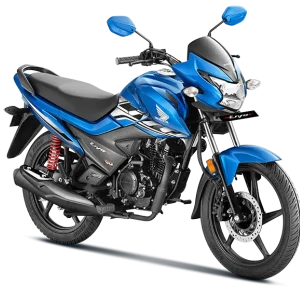
To provide an objective perspective for buyers in the 110cc commuter segment, let’s compare the Suzuki Hayate EP directly with its primary Japanese-branded market rival, the Honda Livo 110 (Drum Variant).
| Metric / Feature Component | Suzuki Hayate EP | Honda Livo 110 (Drum) |
| Engine Displacement | 113.0 cc | 109.51 cc |
| Maximum Power Output | 8.7 BHP @ 7,500 RPM | 8.67 BHP @ 7,500 RPM |
| Maximum Torque Output | 9.3 Nm @ 5,000 RPM | 9.30 Nm @ 5,500 RPM |
| Fuel Supply Mechanism | Carburetor with SEP Tech | Carburetor with HET Tech |
| Wheelbase Length | 1305 mm | 1285 mm |
| Ground Clearance Dimension | 165 mm | 163 mm |
| Kerb Weight Profile | 107 kg | 113 kg |
| Approximate Showroom Price | BDT 118,000 | BDT 119,500 |
Strategic Purchase Logic
The technical matchup reveals that while the power and torque figures look almost identical on paper, the Suzuki Hayate EP delivers its peak torque 500 RPM earlier than the Honda Livo. This gives it a slight advantage when pulling away with heavy loads.
Additionally, the Hayate EP is 6 kg lighter than the Honda Livo. This lighter weight makes it easier to handle when maneuvering manually into tight parking slots in commercial areas like Motijheel. The longer wheelbase of the Suzuki also provides better tracking stability along high-speed corridors like the Dhaka-Mawa Expressway.
Pros & Cons: An Honest Verdict
Every motorcycle involves a balance between production costs and performance features. Based on feedback from long-term owners and fleet operators across Bangladesh, here is an unfiltered breakdown of the strengths and weaknesses of the Suzuki Hayate EP.
Pros
-
Engine Durability: The SEP engine easily crosses the 60,000 km threshold without major compression leaks or piston ring degradation, provided basic oil change intervals are followed.
-
Low Curb Weight: At just 107 kg, it is highly accessible for shorter or older riders who find heavy 150cc commuter alternatives difficult to handle.
-
Tubeless Tyre Configuration: Standard factory alloy wheels come wrapped in tubeless rubber, preventing sudden pressure loss during punctures on debris-laden roads.
-
Low-End Torque Delivery: Exceptional pull performance at low RPM eliminates excessive clutch slipping in bumper-to-bumper traffic.
-
Strong Resale Value: The bike holds its resale value well in the used market because it is highly sought after by ride-sharing operators and delivery professionals.
Cons
-
Lack of Front Disc Brake Option: The all-drum brake setup feels spongy during high-speed emergency deceleration and requires longer stopping distances.
-
Basic Halogen Lighting Array: The 35W AC-powered halogen headlight dims significantly when engine RPM drops at idle, making unlit rural roads challenging to navigate.
-
No Fuel Injection System: It uses a traditional mechanical carburetor rather than an advanced electronic fuel injection system. While this makes it cheaper to fix, it requires periodic manual cleaning and tuning to maintain peak efficiency.
-
Analog Dash Console: The instrument cluster is fully analog and lacks modern amenities like a trip meter, gear position indicator, or digital clock.
Maintenance Tips & Spare Parts Availability
For everyday commuter riders in Bangladesh, minimizing maintenance downtime is crucial for preserving income. The Suzuki Hayate EP stands out in this regard due to its simple mechanical design and widespread parts availability.
Mechanical Simplicity & Service Options
Because the engine layout avoids water pumps, radiators, or complex sensors, any local roadside mechanic can handle basic top-end service tasks. If you prefer factory-authorized support, Rancon Motorbikes operates dedicated service centers across every district headquarters in Bangladesh. These locations feature specialized tools and technicians trained to service Suzuki engine blocks.
Spare Parts Hubs and Component Pricing
If you need non-counterfeit, budget-friendly replacement parts outside of official dealerships, parts hubs like Islampur (Dhaka), Bangshal (Dhaka), and major commercial auto markets in Chittagong carry extensive stock.
-
Original Engine Oil Specification: 20W50 Mineral Grade (Capacity: 700ml without filter change). Recommended replacement interval is every 1,000 to 1,200 km.
-
Spark Plug Maintenance: Clean the spark plug tip every 4,000 km; replace it completely at the 12,000 km mark.
-
Air Filter Unit: Clean the foam element every 2,000 km; swap in a new air filter assembly every 10,000 km to protect the carburetor jets from dust contamination.
Buying Guide & Registration Cost in Bangladesh
When budgeting for a new motorcycle purchase in Bangladesh, you must look beyond the initial showroom price tag. You need to factor in compulsory Bangladesh Road Transport Authority (BRTA) registration fees, mandatory third-party insurance policies, and processing outlays.
Below is an itemized breakdown of the estimated BRTA registration fee structure for an 113cc engine class vehicle as of 2026:
| BRTA Fee Component Description | 2-Year Registration Tenure (BDT) | 10-Year (Lifelong) Registration Tenure (BDT) |
| Base Registration Fee | BDT 4,200 | BDT 4,200 |
| Digital Number Plate & RFID Tag | BDT 2,450 | BDT 2,450 |
| Digital Registration Certificate (DRC) | BDT 600 | BDT 600 |
| Road Tax Component | BDT 2,300 (For 2 Years) | BDT 11,500 (Lifelong Option) |
| Inspection & Supplementary Fees | BDT 500 | BDT 500 |
| Compulsory Third-Party Insurance | BDT 350 | BDT 350 |
| Estimated Broker/Agent Service Margins | BDT 1,500 | BDT 1,500 |
| Total Estimated Initial Outlay | BDT 11,900 | BDT 21,100 |
Pro Tip for Buyers: Always verify whether your chosen showroom includes free registration processing or instant cash discounts that can offset these government fees before finalizing your purchase contract.
Frequently Asked Questions (FAQ)
What is the exact official Suzuki Hayate EP price in Bangladesh right now?
The official price distributed by Rancon Motorbikes Limited is BDT 118,000. It is best to check with localized regional dealers for small variations caused by regional transit fees or ongoing promotional discounts.
What is the real-world mileage of the Suzuki Hayate EP inside Dhaka city traffic?
In heavy stop-and-go urban traffic conditions, you can realistically expect between 52 and 55 km/L. On open highways, maintaining a steady cruising speed can improve fuel economy up to 65 km/L.
Does the Suzuki Hayate EP feature a front disc brake or ABS?
No, the Hayate EP is equipped with mechanical drum brakes on both wheels (130 mm front and 110 mm rear). It does not include a hydraulic disc option, ABS, or CBS assist.
Is the spare parts availability for the Suzuki Hayate reliable in rural areas of Bangladesh?
Yes, because this model has been on the market for years, replacement components are widely available. You can easily find genuine and high-quality aftermarket parts at major motorcycle hubs like Bangshal or through local markets in any district.
What is the recommended engine oil grade and volume for this motorcycle?
The Suzuki Hayate EP requires a 20W50 viscosity grade engine oil. The refill volume is exactly 700 ml when performing standard oil changes without replacing the oil filter element.
Is the Suzuki Hayate EP comfortable for a passenger during long commutes?
Yes, the single flat seat layout is long and well-padded. Combined with the 5-step adjustable rear suspension and stable 1305 mm wheelbase, it handles passenger weight smoothly across local road setups.
Can the Suzuki Hayate EP run smoothly on standard regular-grade petrol?
Yes, its 9.5:1 compression ratio engine is optimized for a standard carburetor delivery setup. It runs efficiently on regular petrol without needing premium high-octane fuels, helping keep daily running costs down.
Why does the Suzuki Hayate EP have a high resale value in Bangladesh?
It maintains a strong resale value due to its reputation for engine reliability, excellent fuel economy, and affordable spare parts. These traits make it highly popular with ride-sharing operators and delivery professionals looking for a durable used vehicle.
Reviews
There are no reviews yet.