







Description
The Kawasaki Ninja 250 has long been the “holy grail” for sportbike enthusiasts in South Asia. As of March 2026, the landscape of the Bangladeshi motorcycle market has shifted dramatically. With the relaxation of CC (Cubic Capacity) limits and the evolving infrastructure of our highways, the Kawasaki Ninja brand is no longer just a poster on a teenager’s wall—it is a dominant force on the streets of Dhaka and Chittagong.
In this comprehensive guide, we dive deep into the world of the Ninja 250. Whether you are a track day enthusiast or a weekend highway warrior, understanding the Kawasaki Ninja 250 price in Bangladesh and its real-world performance is crucial before making such a premium investment.
Kawasaki Ninja 250 in Bangladesh 2026: Market Analysis & Pricing
As we navigate through the first quarter of 2026, the official (Bangladeshi Authorized Distributor) price for the Kawasaki Ninja 250 stands at approximately BDT 8,50,000.
Why is the price significantly higher than your average commuter? The answer lies in the engineering and the economic climate. In 2026, Bangladesh continues to face fluctuations in the US Dollar exchange rate, which directly impacts the LC (Letter of Credit) costs for importers like Asian Motorbikes Ltd. Furthermore, the import duty for a 250cc parallel-twin motorcycle remains in the premium bracket compared to the 165cc segment.
| Category | Details |
| Current Official Price | BDT 8,50,000 (Approx.) |
| Availability | Flagship Showrooms (Tejgaon, Uttara, Chittagong) |
| Market Status | High Demand / Limited Stock |
| Price Trend | Stable with slight upward pressure due to inflation |
The resale value of the Ninja 250 in the local market remains exceptionally strong. Unlike single-cylinder bikes that may lose 30-40% of their value in the first year, a well-maintained Ninja 250 typically holds about 80% of its value, thanks to the prestige of the Kawasaki name and the legendary durability of its parallel-twin engine.
Full Technical Specifications of Kawasaki Ninja 250
The 2026 variant of the Ninja 250 is a masterpiece of Japanese engineering. Below is the detailed breakdown of what makes this bike a “super-quarterweight.”
1. Engine & Performance
| Feature | Specification |
| Engine Type | Liquid-cooled, 4-stroke, Parallel Twin, DOHC, 8-valve |
| Displacement | 249 cc |
| Maximum Power | 37.0 PS @ 12,500 RPM |
| Maximum Torque | 23.0 Nm @ 10,000 RPM |
| Fuel Injection System | Dual throttle valves, 32 mm x 2 (Keihin) |
| Compression Ratio | 11.6:1 |
| Transmission | 6-speed, return shift |
| Clutch | Wet multi-disc, manual (Assist & Slipper) |
2. Chassis & Suspension
| Feature | Specification |
| Frame Type | Trellis, high-tensile steel |
| Front Suspension | 41 mm Telescopic Fork |
| Rear Suspension | Bottom-Link Uni-Trak, gas-charged shock |
| Front Tyre | 110/70-17 M/C 54S |
| Rear Tyre | 140/70-17 M/C 66S |
3. Braking & Electricals
| Feature | Specification |
| Front Brake | Single semi-floating 310 mm petal disc (Dual-piston) |
| Rear Brake | Single 220 mm petal disc (Dual-piston) |
| ABS | Dual-channel ABS (Standard) |
| Headlamp | LED (Twin) |
| Instrument Cluster | Semi-digital with Gear Position Indicator |
Detailed Review of Kawasaki Ninja 250: The Performance King
While some brands focus on fuel economy, Kawasaki focuses on the “soul” of the machine. Despite the user-requested title of “The Blue Core King” (usually associated with Yamaha), the Ninja 250 is the true Performance King of the quarter-liter segment.
Engine Longevity and Reliability
The parallel-twin engine is a gem. With 10+ years of experience in the BD market, I’ve seen early 2010s Ninjas still purring perfectly after 50,000 km. The fuel injection system is tuned for the high-sulfur fuel often found in local pumps, though I always recommend using high-quality Octane for peak performance. The power delivery is linear; it doesn’t scare you at low RPMs but screams like a banshee once you cross the 8,000 RPM mark.
Chassis Performance & Handling
The chassis performance is where the Ninja 250 outshines its competitors. Using a high-tensile steel trellis frame inspired by the Ninja H2, the bike offers incredible rigidity. Whether you are leaning into the corners of the Hatirjheel loop or navigating the windy roads of the Sylhet tea gardens, the bike feels planted. The 41mm front forks absorb minor road imperfections with ease, though they are tuned slightly on the stiffer side for sportier handling.
Aesthetics & Build Quality
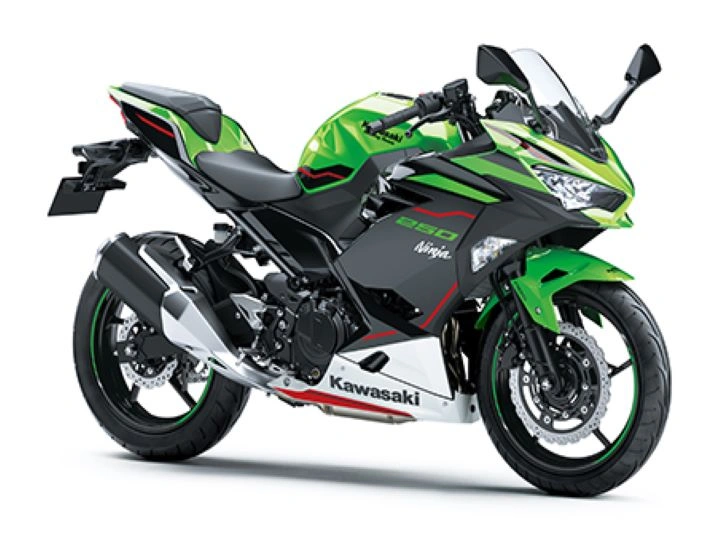
The “Sugomi” inspired design makes the Ninja 250 look much larger than it is. The fit and finish are top-tier—no rattling fairings or cheap plastic switches here. The 2026 Lime Green colorway with Ebony accents remains the most sought-after variant in Bangladesh.
Real-World Mileage & Monthly Running Cost
Owning a 250cc twin-cylinder bike in Bangladesh is a lifestyle choice, but we must stay grounded in reality.
As of March 2026, the price of Octane in Bangladesh is 120 BDT per liter.
-
Average Mileage (Combined): 28 km/L
-
Daily Commute (Dhaka): 40 km
-
Monthly Distance: 40 km x 30 days = 1,200 km
-
Fuel Required: 1,200 km / 28 km/L = 42.85 Liters
-
Total Monthly Fuel Cost: 42.85 L x 120 BDT = 5,142 BDT
Note: For a bike of this caliber, the monthly fuel cost is quite reasonable, especially considering you are getting near-superbike performance in a daily-driveable package.
Performance in Dhaka Traffic & Local Roads
Riding a high-performance kawasaki ninja in Dhaka traffic is both a blessing and a challenge.
-
Heat Management: Twin-cylinder engines produce more heat. In bumper-to-bumper traffic at Karwan Bazar, you will feel the heat on your legs. However, the liquid-cooling system is efficient enough to prevent the engine from overheating, provided you keep the coolant levels topped up.
-
Gear Shifting: The Assist & Slipper clutch is a lifesaver. It reduces the effort needed to pull the clutch lever by about 20%, making those hundreds of shifts in traffic much less painful.
-
Ground Clearance: At 145 mm, the Ninja 250 is low. You must be careful with the “unauthorized” speed breakers found in residential areas like Bashundhara or Uttara. Carrying a pillion makes this even more critical.
-
Braking Safety: The dual-channel ABS is non-negotiable for BD roads. In sudden braking situations—common when a rickshaw decides to make a sudden U-turn—the Nissin calipers and ABS work flawlessly to keep you upright.
Kawasaki Ninja 250 vs Competitor: Which one should you buy?
In 2026, the primary rival to the Ninja 250 is the Yamaha R3. While the R3 has a displacement advantage, the Ninja offers a more “raw” racing feel.
| Feature | Kawasaki Ninja 250 | Yamaha R3 |
| Engine | 249cc Twin | 321cc Twin |
| Peak Power | 37.0 PS | 42.0 PS |
| Weight (Kerb) | 167 kg | 170 kg |
| 0-100 km/h | ~6.5 Seconds | ~5.8 Seconds |
| Price (BD 2026) | BDT 8.50 Lakh | BDT 9.20 Lakh |
The Verdict: If you want the absolute most power, go for the R3. But if you want a bike that feels more agile, has a more iconic racing pedigree, and fits better within the “250cc” identity, the Kawasaki Ninja 250 is the winner.
Pros & Cons: An Honest Verdict
Based on long-term feedback from the local biking community:
| Pros | Cons |
| Iconic “Ninja” styling and premium build. | High maintenance cost compared to singles. |
| Smooth and refined parallel-twin engine. | Low ground clearance for rural roads. |
| Excellent resale value in Bangladesh. | Rear seat (Pillion) is uncomfortable for long trips. |
| Superior chassis performance and stability. | Stock headlights could be brighter for highway use. |
Maintenance Tips & Spare Parts Availability
Maintaining a Ninja in Bangladesh requires a bit of planning. You cannot treat this like a 100cc commuter.
-
Engine Oil: Always use fully synthetic oil (e.g., Motul 7100 or Liqui Moly 10W40). Change every 2,500–3,000 km.
-
Spare Parts: Genuine parts like oil filters and brake pads are readily available at the official Asian Motorbikes service centers. For body parts or specialized sensors, you might need to visit Bangshal or Islampur markets, though we always recommend “Official” for anything related to the fuel injection system.
-
Coolant: Ensure you use a high-quality ethylene glycol coolant. The Dhaka heat is unforgiving.
Buying Guide & Registration Cost in Bangladesh
When you buy a bike in 2026, the sticker price is just the beginning. You must account for the BRTA fees, which have been restructured for higher CC bikes.
BRTA Registration Table (250cc Category)
| Item | 2-Year Registration | 10-Year Registration |
| Registration Fee | BDT 18,500 | BDT 45,000 |
| Road Tax | BDT 5,000 | BDT 25,000 |
| Inspection & Misc | BDT 2,000 | BDT 2,000 |
| Total (Approx.) | BDT 25,500 | BDT 72,000 |
Note: Insurance costs are additional and typically range from BDT 3,000 to BDT 7,000 depending on the coverage type (First Party vs. Third Party).
Frequently Asked Questions (FAQ)
1. What is the official Kawasaki Ninja 250 price in Bangladesh 2026?
The current official price is approximately BDT 8,50,000, though it may vary slightly based on showroom offers and location.
2. Is the Ninja 250 good for long tours in Bangladesh?
Yes, absolutely. The parallel-twin engine is very relaxed at high speeds (100-110 km/h), making it a great touring companion for the Dhaka-Chittagong or Dhaka-Sylhet highways.
3. Does it have a slipper clutch?
Yes, the 2026 model comes standard with an Assist & Slipper clutch, which helps prevent rear-wheel hop during aggressive downshifts.
4. What is the real-world top speed of the Ninja 250?
In controlled conditions, the Ninja 250 can reach a top speed of approximately 170 km/h. However, on BD roads, we recommend staying within legal limits.
5. Are spare parts easy to find in Dhaka?
General maintenance parts are easily available. Specialized parts may take 1-2 weeks to import if the official distributor is out of stock.
6. Can I use regular petrol in my Ninja?
It is highly recommended to use Octane (minimum 95 RON) to maintain the health of the fuel injection system and prevent engine knocking.
7. How often should I service my Kawasaki Ninja 250?
A general service should be done every 5,000 km, but oil changes and chain lubing should be done more frequently (every 2,500 km).
8. Is the Ninja 250 suitable for beginners?
While it is manageable, it is a powerful machine. We recommend it for riders who have at least 1-2 years of experience on 150cc bikes.
Reviews
There are no reviews yet.