









Description
The Kawasaki Ninja H2 is not just a motorcycle; it is a statement of engineering dominance. As we navigate through March 2026, the obsession with high-performance machines in the Bangladeshi biking community has reached a fever pitch. While the local market has traditionally been dominated by 150cc to 165cc commuters, the relaxation of CC limits and the rise of premium lifestyle biking have made the h2 a holy grail for enthusiasts. In this comprehensive guide, we dive deep into the Kawasaki Ninja H2 price in Bangladesh, its mind-bending performance, and whether this supercharged titan can actually survive the chaotic streets of Dhaka.
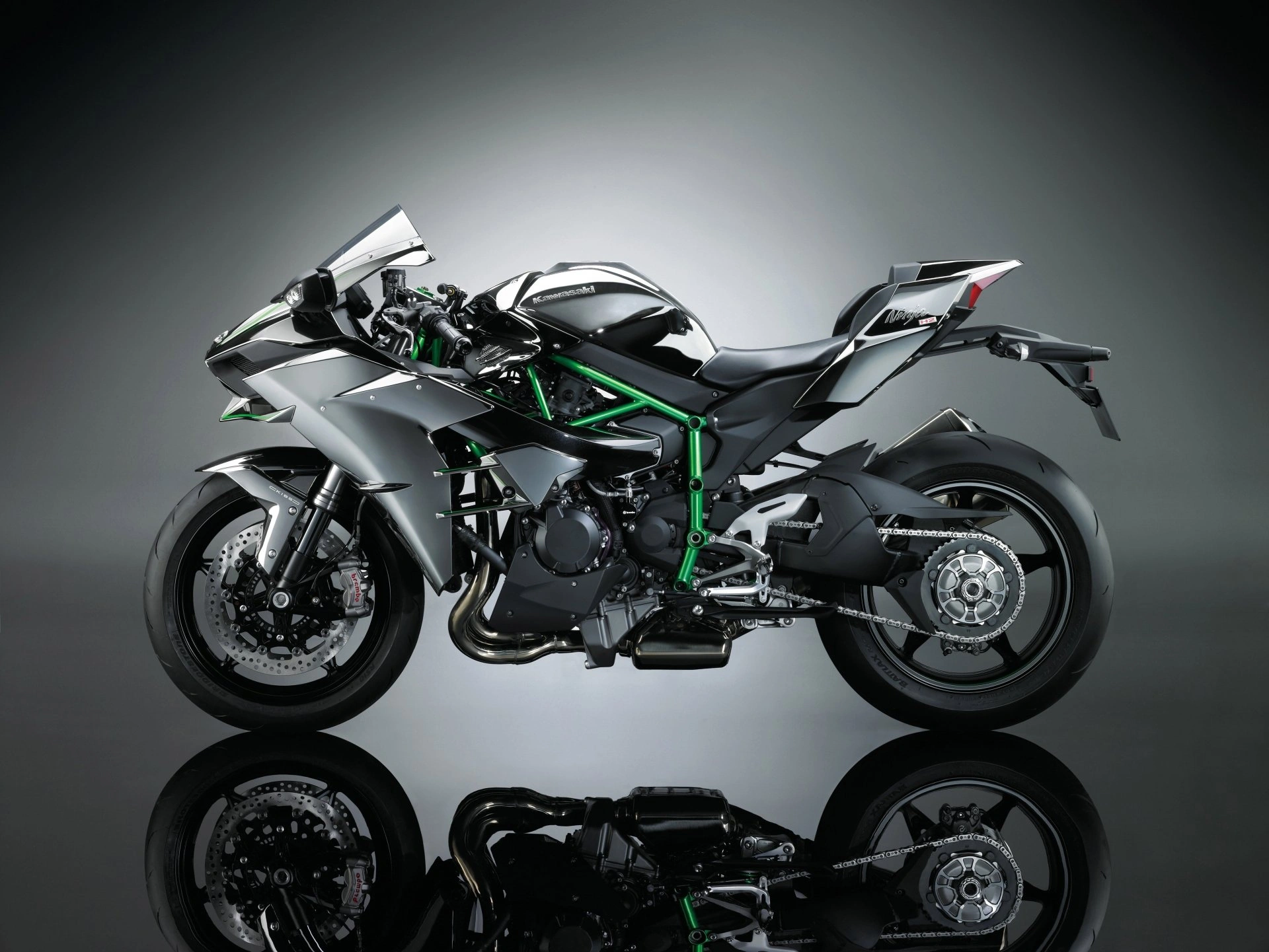
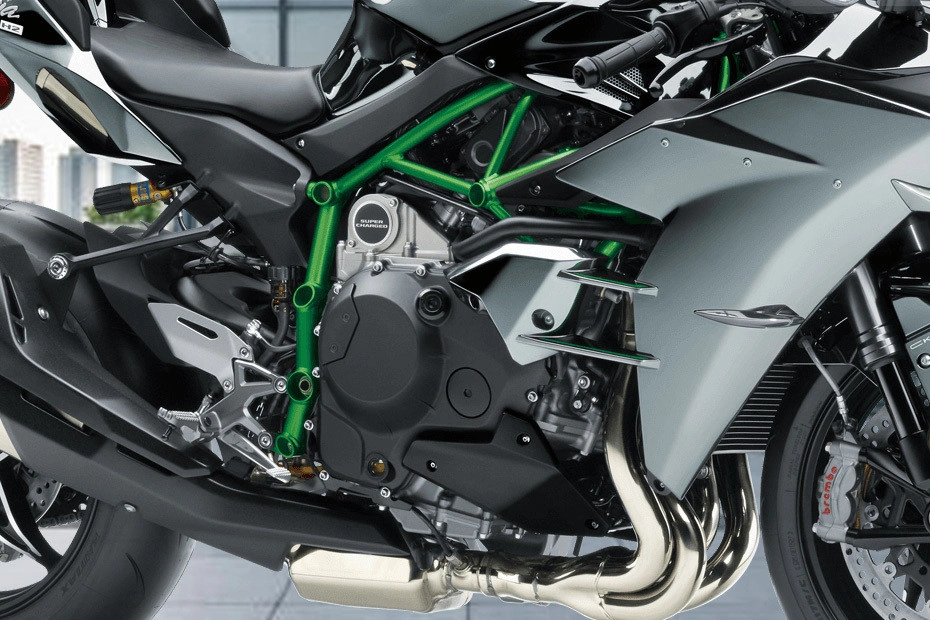
When you talk about the Kawasaki Ninja H2, you are discussing the only mass-produced supercharged hypersport bike in the world. Its chassis performance is legendary, utilizing a trellis frame designed to manage the immense heat and torque generated by its 998cc engine. With a sophisticated fuel injection system (DFI®) and a centrifugal supercharger, the H2 delivers a linear power delivery that is both terrifying and exhilarating. Whether you are looking for the official (Bangladeshi Authorized Distributor) price or considering a gray market import, understanding the total cost of ownership in 2026 is vital.
Kawasaki Ninja H2 Price in Bangladesh 2026
As of March 2026, the Kawasaki Ninja H2 price in Bangladesh is a subject of significant fluctuation. Due to the high-capacity engine (998cc), this bike falls into the highest tax bracket for CBU (Completely Built Up) units. While the government has significantly relaxed the CC limits for local assembly, high-performance imports like the H2 still attract a massive import duty ranging from 150% to 500% depending on the specific customs valuation.
Currently, the estimated price for the Kawasaki Ninja H2 in the Bangladeshi market ranges between BDT 1.2 Crore to BDT 1.8 Crore.
Why the Price Fluctuates:
-
Dollar Exchange Rate: With the BDT navigating a volatile period against the USD in 2026, the L/C opening costs for premium bikes have surged.
-
AIT & Registration Fees: The Advanced Income Tax (AIT) for a bike above 500cc is substantial, often making the official price nearly double the international MSRP.
-
Global Supply Chain: Being a low-volume, high-precision machine, shipping costs and insurance for such an expensive asset add nearly 15% to the final showroom price.
While the resale value of an H2 remains exceptionally high due to its rarity and “collectible” status in Bangladesh, buyers should be prepared for a long lead time if ordering through authorized channels like Asian Motorsports or specialized premium importers.
Full Technical Specifications of Kawasaki Ninja H2
To understand why the h2 is priced like a luxury apartment in Gulshan, one must look at the raw data. This bike is a masterclass in aerodynamics and thermal management.
Engine & Transmission
| Feature | Specification |
| Engine Type | Liquid-cooled, 4-stroke, In-Line Four, Supercharged |
| Displacement | 998cc |
| Bore x Stroke | 76.0 x 55.0mm |
| Compression Ratio | 8.5:1 |
| Fuel Injection System | DFI® with 50mm throttle bodies (Dual Injectors) |
| Maximum Power | 228 HP @ 11,500 rpm (240 HP with Ram Air) |
| Maximum Torque | 141.7 Nm @ 11,000 rpm |
| Transmission | 6-speed, return, dog-ring |
| Final Drive | Sealed chain |
Chassis, Suspension & Brakes
| Feature | Specification |
| Frame Type | Trellis, high-tensile steel, with Swingarm Mounting Plate |
| Front Suspension | 43mm inverted fork (AOB) with rebound and compression damping |
| Rear Suspension | Uni-Trak®, Öhlins TTX36 gas-charged shock |
| Front Brake | Dual radial-mount, opposed 4-piston Brembo Stylema calipers, 330cc discs |
| Rear Brake | Single 250mm disc, opposed 2-piston Brembo caliper |
| Front Tyre | 120/70 ZR17 (58W) |
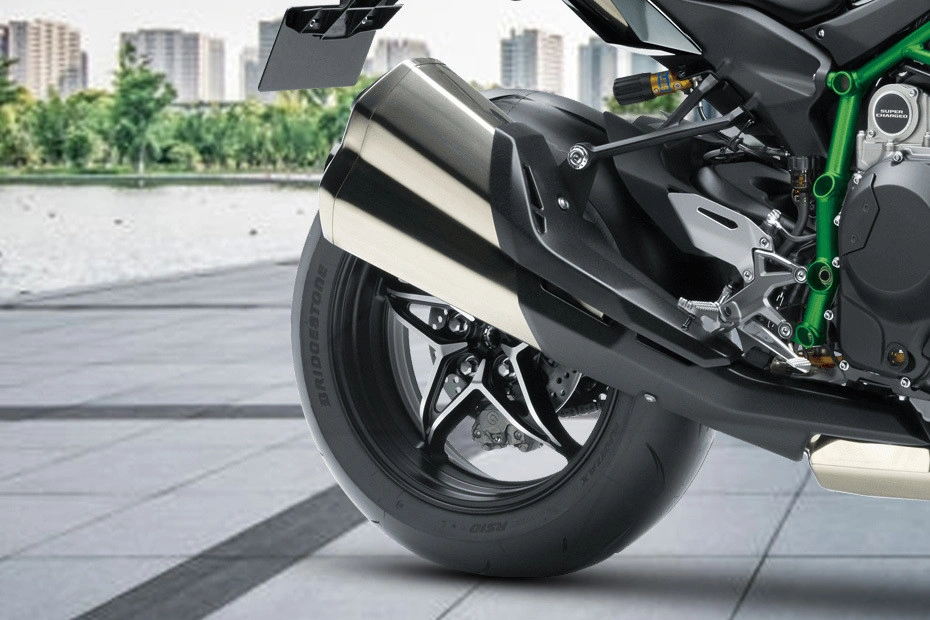
| Rear Tyre | 200/55 ZR17 (78W) |
Electricals & Dimensions
| Feature | Specification |
| ABS | Kawasaki Intelligent Anti-lock Brake System (KIBS) |
| Traction Control | KTRC (9-mode), IMU-enhanced |
| Curb Weight | 238 kg (524.8 lb) |
| Fuel Capacity | 17 Liters |
| Wheelbase | 1,455 mm |
Detailed Review of Kawasaki Ninja H2: The Supercharged King
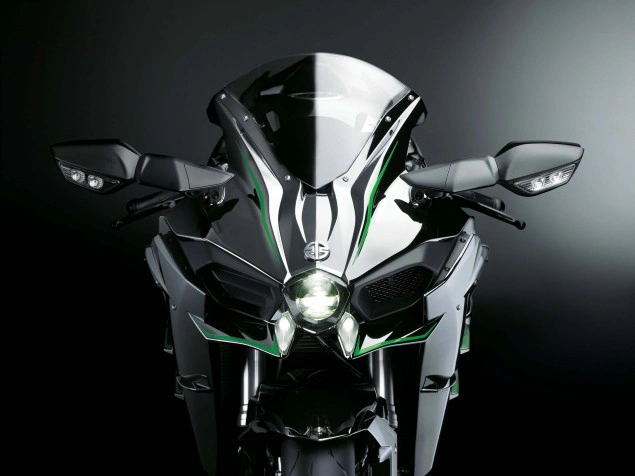
Walking up to a Kawasaki Ninja H2 in a Dhaka showroom is an intimidating experience. The first thing you notice is the Mirror Coated Spark Black paint. This isn’t just paint; it contains a layer of real silver that creates a 3D effect, reflecting the city lights of Banani or Purbachal with a glass-like finish.
Engine Longevity & The Supercharger
Many Bangladeshi riders worry about the longevity of forced-induction engines in our hot and humid climate. However, Kawasaki’s aerospace division designed this supercharger specifically for this engine. Unlike a turbo, which relies on exhaust gases and creates immense heat, the H2’s centrifugal supercharger is gear-driven. This ensures the fuel injection system can maintain a consistent air-fuel ratio, preventing the engine from knocking even when using local “Octane” (provided you use high-quality fuel additives).
Build Quality & Chassis Performance
The chassis performance of the H2 is what separates it from a standard liter-bike. The trellis frame allows for better heat dissipation than a traditional twin-spar frame. In the stop-and-go traffic of Dhaka, where engine heat can become unbearable, the H2’s frame allows air to circulate around the engine block more effectively. The build quality is “over-engineered”—every bolt, every fairing clip feels like it was designed for a fighter jet.
Aesthetics & Real-World Durability
The H2 features “River Mark” emblems, a logo reserved only for Kawasaki products of historical significance. In terms of durability, the H2 is surprisingly robust. While it looks like a fragile piece of art, the components are race-grade. The Brembo Stylema brakes offer incredible feel, and even after 5,000 km on Bangladeshi roads, the suspension seals and electronic sensors tend to hold up well, provided the bike isn’t subjected to monsoon flooding.
Real-World Mileage & Monthly Running Cost
Owning an H2 in Bangladesh is a “pay-to-play” game. If you are worried about mileage, this might not be the bike for you. However, for a 200+ HP machine, the efficiency is surprisingly decent when ridden in “Rain Mode” or low-RPM settings.
-
Average Mileage: 10–12 km/l (City); 15 km/l (Highway).
-
Fuel Requirement: Minimum 95 Octane (High-quality Petrol).
Estimated Monthly Running Cost (March 2026):
Assumptions: 40 km/day commuting/riding (1,200 km/month), Octane price at BDT 145/liter.
| Expense Item | Calculation | Estimated Cost (BDT) |
| Fuel Cost | (1,200km / 11kmpl) * 145 | BDT 15,818 |
| Consumables | Chain lube, coolant top-up | BDT 2,500 |
| Pro-rated Service | (Oil/Filter change every 3k km) | BDT 4,500 |
| Total Monthly Cost | — | BDT 22,818 |
Note: This does not include the massive insurance premium or the depreciation cost, which is a significant factor for the resale value of premium imports.
Performance in Dhaka Traffic & Local Roads
Riding a Kawasaki Ninja H2 in Dhaka traffic is like trying to fly a Boeing 747 in a parking lot. It is possible, but it requires extreme discipline.
Gear Shifting & Heat
In bumper-to-bumper traffic (e.g., Mohakhali to Uttara), you will rarely leave 1st gear. The H2’s 1st gear can theoretically hit 140 km/h. The heat generated in these conditions is intense. Kawasaki’s cooling system is excellent, but your legs will feel the 1000cc heat. The Kawasaki Quick Shifter (KQS) is buttery smooth for upshifts, but in heavy traffic, you’ll find yourself relying on the light-pull slipper clutch.
Ground Clearance & Speed Breakers
With a ground clearance of roughly 130mm, the H2 is low. Dhaka’s “unauthorized” speed breakers can be a nightmare. You will need to take most speed bumps diagonally to avoid scraping the expensive belly pan or the exhaust headers.
Braking Safety
Dhaka’s roads are unpredictable—rickshaws, pedestrians, and erratic buses are constant hazards. The KIBS (Kawasaki Intelligent Anti-lock Brake System) is a lifesaver here. It doesn’t just prevent wheel lock; it manages the pitch of the bike to ensure that even under emergency braking on dusty roads (like those in Purbachal), the bike remains stable.
Kawasaki Ninja H2 vs BMW S1000RR: Which one should you buy?
In the premium segment in Bangladesh, the H2’s primary rival is the BMW S1000RR.
| Feature | Kawasaki Ninja H2 | BMW S1000RR |
| Engine Type | Supercharged Inline-4 | Naturally Aspirated Inline-4 |
| Peak Power | 228 HP | 205 HP |
| Torque | 141.7 Nm | 113 Nm |
| Weight (Curb) | 238 kg | 197 kg |
| Tech Focus | Raw Power & Torque | Agility & Electronics |
| Est. Price (BD) | BDT 1.5 Crore+ | BDT 1.1 Crore+ |
Verdict: If you want the ultimate “flex” and unmatched straight-line speed with a supercharger whistle that turns heads everywhere, the h2 is the winner. If you want a more “flickable” bike for track days or weekend corner carving, the BMW might be the more practical (relative term) choice.
Pros & Cons: An Honest Verdict
Pros
-
Unmatched Presence: No other bike in Bangladesh commands as much respect or attention.
-
Supercharger Whistle: The sound of the blow-off valve is addictive and unique to the H2.
-
Top-Tier Electronics: Features like Launch Control (KLCM) and Engine Brake Control (KEBC) make the power manageable.
-
Resale Value: Because they are so rare in BD, they hold their value incredibly well among collectors.
Cons
-
Extreme Heat: Not designed for 35°C Dhaka humidity and crawling traffic.
-
Weight: At 238kg, it is heavy and difficult to maneuver in tight parking spots.
-
Fuel Sensitivity: Highly sensitive to low-grade fuel found in many local stations.
-
Maintenance Cost: Spare parts must often be flown in from Japan or Dubai.
Maintenance Tips & Spare Parts Availability
Maintaining a Kawasaki Ninja H2 in Bangladesh requires a dedicated budget and a “pre-emptive” mindset.
-
Oil Selection: Only use high-grade synthetic oils (like Motul 300V or Liqui Moly Street Race). Changing the oil every 2,500–3,000 km is recommended due to the high stress of the supercharged engine.
-
Spare Parts: Do not look for H2 parts in Islampur or Bangshal unless you are looking for generic items like indicators or mirrors. For engine components, seals, or the supercharger belt, you must visit the official (Bangladeshi Authorized Distributor) or specialized outlets like “Moto Solution” or “Bikerz Hub” who can indent parts from abroad.
-
Part Pricing:
-
Brake Pads (Front): BDT 15,000–20,000.
-
Oil Filter: BDT 2,500–4,000.
-
Tyre Set: BDT 45,000–60,000.
-
-
Air Filter: The supercharger breathes a lot of air. Ensure the air filter is cleaned every 1,000 km, as Dhaka’s dust can significantly reduce performance.
Buying Guide & Registration Cost in Bangladesh
Buying an H2 is a legal marathon. You need to ensure the VIN matches the paperwork perfectly to avoid issues with the BRTA.
BRTA Registration Fees (10-Year Estimate for 1000cc)
Note: These are projected 2026 figures based on high-capacity luxury taxation.
| Item | Estimated Cost (BDT) |
| Registration Fee | BDT 1,50,000 |
| Digital Number Plate & RFID | BDT 5,000 |
| Luxury Tax (Special Category) | BDT 5,00,000+ |
| Insurance (Comprehensive) | BDT 1,20,000/year |
| Total Initial Paperwork | BDT 7,75,000+ |
Pro Tip: Always buy from an importer who provides a “Full Tax Paid” certificate. If the price seems too good to be true, it might be a “grey” import with unpaid duties, which can lead to the bike being seized by Customs.
Frequently Asked Questions (FAQ)
1. What is the Kawasaki Ninja H2 price in Bangladesh in 2026?
The price varies based on import duties but generally ranges from BDT 1.2 Crore to BDT 1.8 Crore for a new unit.
2. Can I ride the H2 on a standard Bangladeshi driving license?
Yes, as long as your license is for “Motorcycles.” However, advanced rider training is highly recommended due to the bike’s power.
3. Is the Ninja H2 street-legal in Bangladesh?
Yes, provided the CC limit for the year 2026 allows for 1000cc registration and all import duties are paid. Currently, most H2s are used for display or track purposes unless registered under specific luxury permits.
4. Where can I find spare parts for the H2 in Dhaka?
Official parts are available through authorized distributors. For urgent needs, parts are typically imported from Singapore or Dubai.
5. Does the H2 overheat in Dhaka traffic?
It runs very hot. It is not recommended for peak-hour commuting. It is best enjoyed on the Dhaka-Mawa Expressway or early morning rides.
6. What is the top speed of the Ninja H2 in Bangladesh?
While the bike can exceed 300 km/h, there are no roads in Bangladesh where this is safe or legal. On closed runways, it is a 300+ km/h machine.
7. Does it require special fuel?
Yes, it requires 95+ Octane. Owners often use octane boosters to ensure the supercharger doesn’t face “knock” issues.
8. What is the resale value of a used H2 in BD?
Due to its rarity, a well-maintained H2 can often be sold for 80-90% of its purchase price, even after 2-3 years.
Reviews
There are no reviews yet.